B.Pharm 1st Year Subjects Under RGUHS
The B.Pharm first year curriculum is regulated by the Pharmacy Council of India (PCI) and follows the university syllabus prescribed by RGUHS (Rajiv Gandhi University of Health Sciences). The first year covers foundational pharmaceutical sciences that prepare students for advanced subjects in subsequent years. Here is the complete subject list and syllabus overview for B.Pharm 1st Year (Semesters 1 and 2) as prescribed for the 2026 academic session.
Semester 1 Subjects
| Subject Code | Subject Name | Theory Hours | Practical Hours | Credits |
|---|---|---|---|---|
| BP101T | Human Anatomy and Physiology I | 45 | — | 4 |
| BP102T | Pharmaceutical Analysis I | 45 | — | 4 |
| BP103T | Pharmaceutics I | 45 | — | 4 |
| BP104T | Pharmaceutical Inorganic Chemistry | 45 | — | 4 |
| BP105T | Communication Skills | 30 | — | 2 |
| BP106P | Human Anatomy and Physiology I (Practical) | — | 60 | 2 |
| BP107P | Pharmaceutical Analysis I (Practical) | — | 60 | 2 |
| BP108P | Pharmaceutics I (Practical) | — | 60 | 2 |
| BP109P | Pharmaceutical Inorganic Chemistry (Practical) | — | 60 | 2 |
| BP110P | Communication Skills (Practical) | — | 30 | 1 |
Semester 2 Subjects
| Subject Code | Subject Name | Theory Hours | Practical Hours | Credits |
|---|---|---|---|---|
| BP201T | Human Anatomy and Physiology II | 45 | — | 4 |
| BP202T | Pharmaceutical Organic Chemistry I | 45 | — | 4 |
| BP203T | Biochemistry | 45 | — | 4 |
| BP204T | Pathophysiology | 45 | — | 4 |
| BP205T | Computer Applications in Pharmacy | 30 | — | 2 |
| BP206T | Environmental Sciences | 30 | — | 2 |
| BP207P | Human Anatomy and Physiology II (Practical) | — | 60 | 2 |
| BP208P | Pharmaceutical Organic Chemistry I (Practical) | — | 60 | 2 |
| BP209P | Biochemistry (Practical) | — | 60 | 2 |
| BP210P | Computer Applications in Pharmacy (Practical) | — | 60 | 2 |
Subject-Wise Overview
Human Anatomy and Physiology (Sem 1 & 2)
This subject covers the structure and function of the human body — essential knowledge for understanding how drugs interact with biological systems. Semester 1 focuses on cellular physiology, skeletal system, muscular system, and cardiovascular system. Semester 2 covers the nervous system, endocrine system, respiratory system, digestive system, and renal physiology.
Why it matters for pharmacy: Understanding body systems is fundamental to pharmacology — you need to know where and how drugs act to be an effective pharmacist.
Pharmaceutical Analysis I
Introduction to analytical techniques used in pharmaceutical quality control — titrimetric methods, acid-base titrations, non-aqueous titrations, redox titrations, complexometric titrations, and gravimetric analysis. Students learn to determine the purity and potency of pharmaceutical compounds.
Get the 2026-27 Admission Brochure
Fees, eligibility, placement details, campus photos — all in one PDF. WhatsApp us to get it instantly.
Pharmaceutics I
The core subject of pharmacy — covers dosage form science including solutions, suspensions, emulsions, powders, capsules, and tablets. Students learn about formulation principles, excipients, and pharmaceutical calculations that form the foundation of drug manufacturing.
Pharmaceutical Inorganic Chemistry
Covers inorganic pharmaceutical compounds — their preparation, properties, uses, and quality control. Topics include monographs of official (IP/BP) inorganic compounds, limit tests for impurities, and the pharmaceutical applications of inorganic elements.
Pharmaceutical Organic Chemistry I (Sem 2)
Introduction to organic chemistry relevant to pharmacy — covers nomenclature, stereochemistry, reaction mechanisms, and functional group chemistry. Understanding organic chemistry is critical for drug design and medicinal chemistry in later semesters.
Biochemistry (Sem 2)
Studies biological molecules (carbohydrates, proteins, lipids, nucleic acids) and metabolic pathways. Understanding biochemistry helps pharmacists comprehend drug metabolism, enzyme interactions, and the biochemical basis of diseases.
Examination Pattern (RGUHS)
| Component | Theory Subjects | Practical Subjects |
|---|---|---|
| Internal Assessment | 20 marks | 10 marks |
| University Exam | 80 marks | 40 marks |
| Total | 100 marks | 50 marks |
| Passing Marks | 50% (separately in theory and IA) | 50% |
Tips for B.Pharm 1st Year Students
- Start with Anatomy and Pharmaceutics — these two subjects have the most content and require consistent study from day one
- Practice pharmaceutical calculations daily — Pharmaceutics I involves numerical problems that need regular practice
- Don’t skip practical sessions — practical exams carry significant marks and lab skills are essential for your career
- Use reference books alongside textbooks — Sembulingam for Anatomy, Aulton for Pharmaceutics, Morrison & Boyd for Organic Chemistry
- Form study groups — collaborative learning helps with complex subjects like Biochemistry and Pathophysiology
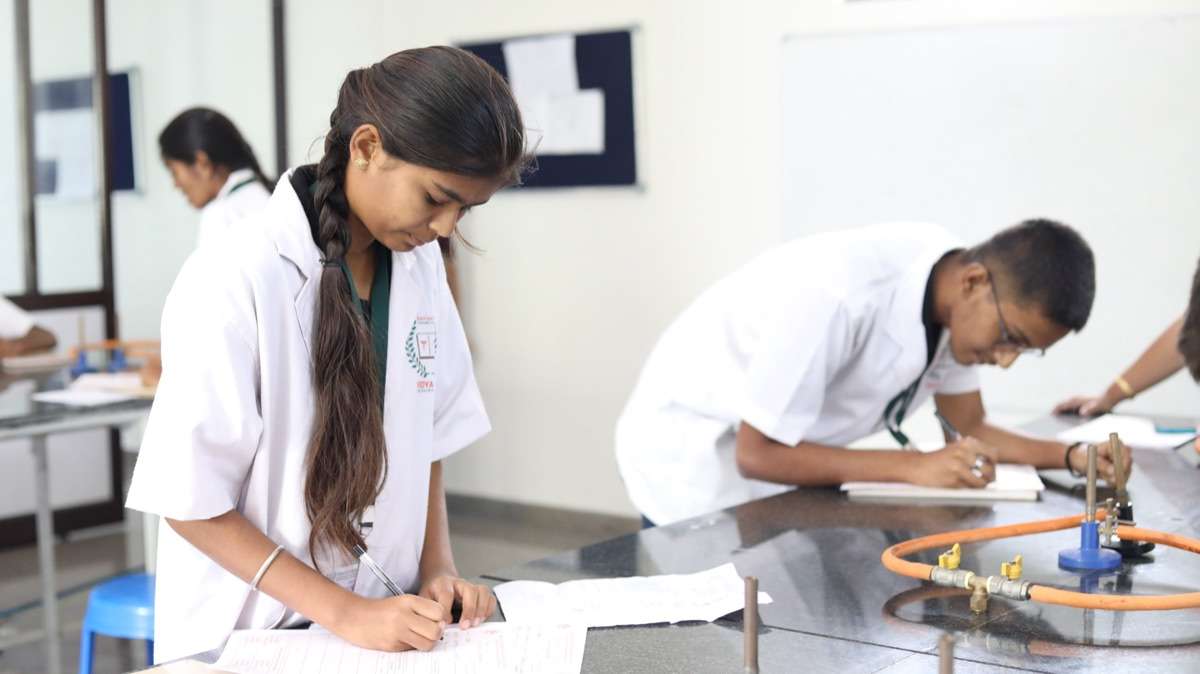
At Vidya Siri College of Pharmacy, B.Pharm 1st year students benefit from well-equipped laboratories that meet PCI laboratory standards, experienced faculty, and structured teaching that covers the complete RGUHS syllabus. The college’s location near Bangalore’s pharma hub also enables early industry exposure for students.
Frequently Asked Questions
What are the subjects in B.Pharm 1st year?
B.Pharm 1st year has 10 subjects across 2 semesters: Human Anatomy and Physiology I & II, Pharmaceutical Analysis I, Pharmaceutics I, Pharmaceutical Inorganic Chemistry, Pharmaceutical Organic Chemistry I, Biochemistry, Pathophysiology, Communication Skills, Computer Applications in Pharmacy, and Environmental Sciences.
Is B.Pharm 1st year difficult?
B.Pharm 1st year is manageable with consistent study. Anatomy and Pharmaceutics require the most preparation. Students from PCB background find Anatomy easier, while PCM students find Pharmaceutical Analysis and Chemistry more familiar. Regular practical attendance and timely revision are key to performing well.
How many practicals are in B.Pharm 1st year?
B.Pharm 1st year has 5 practical subjects in each semester — a total of 10 practical papers across both semesters. Each practical subject has 60 hours of lab work (except Communication Skills Practical which has 30 hours).
What is the passing mark in RGUHS B.Pharm exams?
Students need a minimum of 50% marks in each theory and practical subject separately to pass RGUHS B.Pharm examinations. Internal assessment and university exam marks must both meet the minimum threshold independently.

Dr. Sree Harsha N, M.Pharm, PhD — Chairman
Ready to Start Your Pharmacy Career?
B.Pharm Rs 70,000/yr • D.Pharm Rs 80,000 (2 yrs) • No NEET • PCI Approved