
B.Pharm vs D.Pharm — Which Pharmacy Course Is Right for You? (2026 Guide)
B.Pharm is a 4-year degree built for higher studies, industry, research and government roles. D.Pharm is a 2-year diploma that gets you working fast, at low cost, and lets you run your own pharmacy. Choose based on your timeline and goals — not on which sounds bigger.
• 14-minute read
• Reviewed by the VSCP Academic Team
• Sarjapur Road, Bengaluru
RGUHS Affiliated
91.16% Top RGUHS Result 2026
No NEET • No KCET
60 + 60 Seats
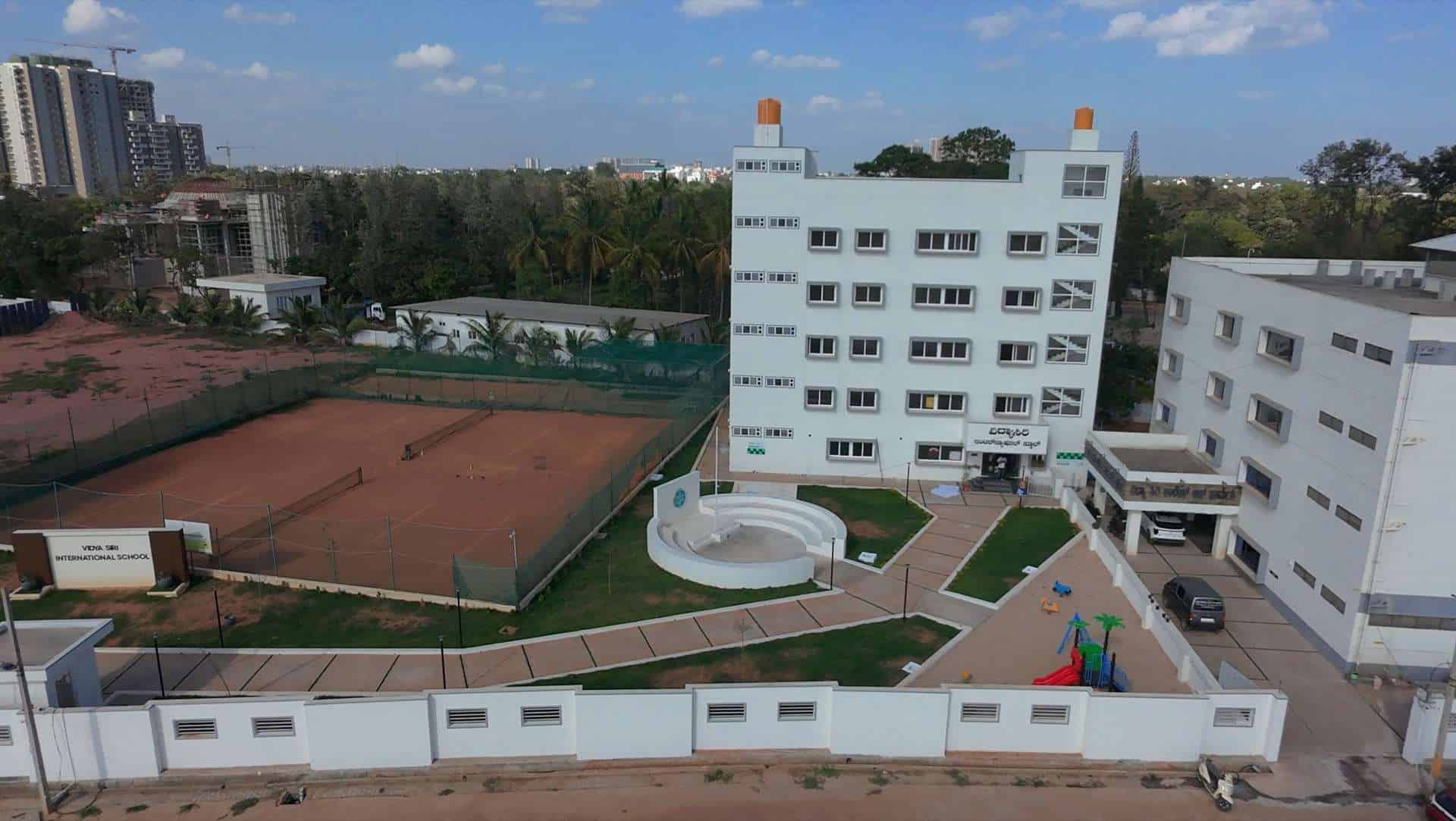
This is probably the biggest question sitting on your mind right now: B.Pharm or D.Pharm? You have finished Class 12, pharmacy feels like the right field, and now everyone — parents, cousins, that one uncle who “knows about these things” — has an opinion. Let me make one thing clear before we go any further.
There is no wrong answer here. Both B.Pharm and D.Pharm are legitimate, PCI-recognised pharmacy qualifications. Both lead to real careers. Both can support a good life. The difference is not that one is “good” and the other is “lesser.” The difference is that they suit different people with different goals.
Get the 2026-27 Admission Brochure
Fees, eligibility, placement details, campus photos — all in one PDF. WhatsApp us to get it instantly.
Over the years, our team has sat across the table from hundreds of students facing exactly this fork in the road. And the ones who choose well are never the ones who picked the “higher” option out of pressure. They are the ones who got honest about what they actually want — how fast they need to earn, how much they can spend, and how far they eventually want to go. That is what this guide will help you do. Let us walk through it together.
Real talk before we start: a lot of students walk in believing D.Pharm is the “lower” choice for those who could not manage B.Pharm. That belief has cost more good careers than any exam ever did. Some of the most successful pharmacy professionals we know started with a two-year diploma and built something bigger than most degree-holders. And some brilliant B.Pharm graduates would have been far happier — and earning sooner — on the D.Pharm track. So park the status question at the door. The only useful question is which course fits the life you are trying to build.
The 30-Second Answer
If you only have half a minute, start here. Read both boxes and notice which one makes you nod.
Choose B.Pharm if…
- You want the highest career ceiling — industry, R&D, regulatory affairs, or a government post like Drug Inspector.
- You plan to study further — M.Pharm, Pharm.D, an MBA, or a PhD are all built on a B.Pharm base.
- You are willing to invest four years now for wider, faster-growing options later.
Choose D.Pharm if…
- You want to start earning quickly — a qualified, licence-ready pharmacist in just two years.
- Your dream is to open and run your own pharmacy or medical store.
- You are cost-conscious and want a low-fee route into a stable healthcare career.
Still torn? Good — that means you are taking it seriously. The rest of this guide gives you the full picture so you can decide with confidence, not guesswork.
The Full Comparison
Here are both courses side by side across 16 parameters that actually affect your decision. Read down the rows and see where the gaps matter to you.
| Parameter | B.Pharm | D.Pharm |
|---|---|---|
| Full form | Bachelor of Pharmacy | Diploma in Pharmacy |
| Duration | 4 years (8 semesters) | 2 years (4 semesters) + 500-hour practical training |
| Qualification type | Undergraduate degree | Diploma |
| Eligibility | 10+2 with Physics, Chemistry & Biology / Maths | 10+2 with Physics, Chemistry & Biology / Maths |
| Minimum marks | 45% aggregate (40% for reserved categories) | 40% aggregate (35% for reserved categories) |
| Entrance exam | None at VSCP — merit on Class 12 marks (no NEET/KCET) | None at VSCP — merit on Class 12 marks (no NEET/KCET) |
| Regulator / affiliation | PCI + RGUHS (university degree) | PCI + Karnataka State Board of Pharmacy |
| Semesters | 8 | 4 |
| Practical training | Lab work every semester + industrial & hospital exposure | Mandatory 500-hour (3-month) hands-on training |
| Fee range (India, typical) | Rs 40,000 – Rs 2,00,000 per year (private) | Rs 20,000 – Rs 1,50,000 total |
| Fee at VSCP | Rs 70,000 per year (Rs 2,80,000 total) | Rs 80,000 total for 2 years |
| Lateral entry | Not needed — you are already in the degree | Can enter B.Pharm 2nd year directly after D.Pharm |
| Higher studies | M.Pharm, Pharm.D (post-baccalaureate), MBA, PhD | B.Pharm via lateral entry, then M.Pharm / PhD |
| Career ceiling | High — R&D, regulatory, management, teaching, govt | Moderate salaried; high if you own a pharmacy |
| Fresher salary | Rs 2.5 – 4 lakh per year | Rs 1.8 – 3 lakh per year |
| Salary at ~10 years | Rs 8 – 20 lakh (role-dependent) | Rs 4 – 15 lakh+ (own store can go higher) |
Notice the pattern: B.Pharm asks for more time and money upfront and repays it with reach. D.Pharm asks for less and repays it with speed. Neither trade-off is “correct” in the abstract — it depends entirely on your situation. Let us look at each course more closely.
What Exactly Is B.Pharm?
B.Pharm — Bachelor of Pharmacy — is a four-year undergraduate degree affiliated to a health-sciences university (at VSCP, that is RGUHS). Think of it as the full pharmacy education. Over eight semesters you go deep: pharmaceutical chemistry, pharmacology, pharmaceutics, pharmacognosy, medicinal chemistry, biotechnology, pharmaceutical analysis, jurisprudence, and management. You spend serious hours in the lab, and later you get industrial and hospital exposure that connects theory to real practice. You can preview the detail on our B.Pharm RGUHS syllabus page.
Who thrives here? The student who is genuinely curious about how and why a drug works, not just how to dispense it. The one who can picture themselves in a formulation lab, a quality-control department, a regulatory-affairs team, or eventually a classroom. B.Pharm is also the honest choice if you know, even now, that you want a master’s degree or a government job — because those doors need a degree to open. It demands patience: four years is a real commitment. But it hands you the widest map of career roads in pharmacy. Explore where it leads on our scope of B.Pharm in India page.
What Exactly Is D.Pharm?
D.Pharm — Diploma in Pharmacy — is a focused, practical, two-year programme that qualifies you to register as a pharmacist and work at the point where medicines meet people. Across four semesters and a mandatory 500-hour hands-on training block, you learn pharmaceutics, pharmacology, pharmacognosy, biochemistry, hospital and community pharmacy, and drug store management. It is deliberately hands-on: less theory-for-theory’s-sake, more “here is how a pharmacy actually runs.” Our D.Pharm syllabus page has the full breakdown.
Who thrives here? The student who wants to start working and earning soon, without four years of waiting. The one who is drawn to patient-facing work — a hospital pharmacy, a community chemist, a healthcare counter where you are the trusted face people ask about their medicines. And crucially, the aspiring business owner: D.Pharm is the minimum qualification to legally run your own medical store, which for many families is the whole point. It costs less, finishes faster, and if you later want the full degree, lateral entry is waiting for you. See what unfolds after it on our career after D.Pharm page.
Not sure which one fits you? Talk to a VSCP advisor — no pressure, just honest guidance for your situation.
Career Paths — Side by Side
Titles are where the two courses really separate. Some roles are open to both; a few need the degree. Here is the honest map of who can do what — and the ballpark pay.
| Career | B.Pharm? | D.Pharm? | Typical Salary |
|---|---|---|---|
| Drug Inspector (Govt) | Yes | No | Rs 5 – 9 LPA (pay scale) |
| Hospital Pharmacist | Yes | Yes | Rs 2.5 – 5 LPA |
| Industry QA / QC | Yes | Limited | Rs 3 – 6 LPA |
| Medical Representative | Yes | Yes | Rs 3 – 6 LPA + incentives |
| Own Pharmacy / Retail | Yes | Yes | Rs 3 – 15 LPA+ (as owner) |
| Clinical Research | Yes | No | Rs 3 – 7 LPA |
| Teaching / Lecturer | Yes (with M.Pharm) | No | Rs 3 – 8 LPA |
| Regulatory Affairs | Yes | No | Rs 4 – 10 LPA |
| R&D / Formulation | Yes | No | Rs 3 – 8 LPA |
Read the table honestly and you will see the real story. D.Pharm holds its own beautifully in patient-facing and retail roles — and it is the only practical route if your goal is to own a store. B.Pharm simply keeps more doors open, especially the government, research and regulatory doors that a diploma cannot reach on its own. Salary figures are indicative national ranges and vary by city, employer and performance; see our pharmacy salary guide for role-by-role detail.
One more thing the table cannot show: trajectory. Two graduates can start a role at the same pay, but the one with a degree usually has more rungs above them — a QC analyst can grow into a QA manager, a formulation trainee into an R&D lead. That is the quiet advantage B.Pharm buys you: not always a bigger first salary, but a longer ladder. D.Pharm’s ladder is shorter inside a company, which is exactly why so many diploma-holders eventually step off it to build their own pharmacy, where they own every rung.
Here is what nobody tells you: a D.Pharm graduate who opens their own pharmacy store can earn more than a B.Pharm graduate in a corporate job. A busy neighbourhood pharmacy is a real business with real margins — and the owner keeps them. It is not about which certificate is “bigger.” It is about what you want to build.
Can You Switch? (D.Pharm → B.Pharm Lateral Entry)
This is the safety net most students do not realise exists — and it changes the whole decision. You are not choosing between two doors that lock behind you. If you start with D.Pharm and later decide you want the full degree, you can join B.Pharm directly in the second year through lateral entry.
Here is how it works. You complete your two-year D.Pharm, usually needing around 50% marks to qualify. You then enter the B.Pharm second year and finish the remaining three years — so the degree takes three years after D.Pharm instead of the full four. At the end, you hold the exact same RGUHS B.Pharm degree as a student who started in the first year. No asterisk, no lesser version.
For a lot of families this is the ideal path: earn early and cheaply with D.Pharm, get real-world experience, then upgrade to the degree once you are sure it is worth it — sometimes even while working. Read the full eligibility rules and the step-by-step route on our D.Pharm to B.Pharm lateral entry guide.
The Money Question
Let us talk plainly about cost, because for many students this is the deciding factor — and there is no shame in that. A course you can actually afford beats a “prestige” course that strains the household. Here is the honest side-by-side at VSCP.
| Money Factor | B.Pharm (VSCP) | D.Pharm (VSCP) |
|---|---|---|
| Total course fee | Rs 2,80,000 (Rs 70,000 × 4 years) | Rs 80,000 (full 2 years) |
| Years until you can earn | 4 years | 2 years |
| Typical fresher salary | Rs 2.5 – 4 LPA | Rs 1.8 – 3 LPA |
| Rough time to recover fees | ~1 – 1.5 years of earning | Under 1 year of earning |
| Long-term earning ceiling | Higher — scales with roles & higher studies | Strong if self-employed; moderate if salaried |
| Right choice when… | You want reach, growth & further study | You want speed, low cost & early income |
The takeaway is not “D.Pharm is cheaper so pick it.” It is that return on investment depends on your plan. If you will use a B.Pharm to climb into industry or regulatory work, the extra Rs 2 lakh and two years pay for themselves many times over. If you intend to open a store and start serving your community in two years, D.Pharm gives you a faster, lighter runway. Dig deeper on the B.Pharm fees and D.Pharm fees pages.
Want a clear fee breakdown and scholarship options for your budget? Ask us directly — we will lay it all out.
How to Decide — A Framework
Forget what sounds impressive at family gatherings. Run yourself through these five honest questions, and your answer usually appears on its own.
1. What is your timeline — 2 years or 4? If you need (or want) to be qualified and earning quickly, D.Pharm gets you there in two years. If you can invest four years now for a wider payoff later, B.Pharm rewards the patience.
2. What is your budget? If keeping costs low is essential right now, D.Pharm’s Rs 80,000 total is far lighter than B.Pharm’s Rs 2,80,000. Be honest about what your family can carry comfortably — and remember lateral entry lets you upgrade later.
3. Do you want to do M.Pharm, Pharm.D or a PhD later? If there is even a flicker of “maybe I’ll study further,” lean B.Pharm — it is the required base for almost every advanced pharmacy qualification.
4. Do you dream of owning your own pharmacy? If yes, D.Pharm is genuinely the efficient answer — it is the minimum licence to register as a pharmacist and run your own store, and you get there in half the time.
5. Do you want government-job eligibility? Posts like Drug Inspector and many public-sector pharmacy roles require a degree. If a government career is the goal, choose B.Pharm — or plan the D.Pharm-then-lateral-entry route deliberately.
Count where your answers landed. If most point to reach, growth and further study, B.Pharm is your course. If most point to speed, affordability and running your own show, D.Pharm is. And if you are split down the middle, remember the third option many of our students choose: start with D.Pharm, then upgrade through lateral entry once you are certain. Not sure? Our pharmacy courses after 12th page zooms out to the whole landscape, and the pharmacy admission FAQ answers the practical questions.
And here is the last piece of counsel, from having watched this decision play out hundreds of times: do not over-optimise it. Both of these are good courses that lead to a real, respected profession — people will always need medicines, and they will always need trained pharmacists to guide them. You are not choosing between success and failure. You are choosing between two honourable roads to the same field. Pick the one that fits your timeline, your budget, and the picture in your head of the work you want to do — then commit to it fully. That commitment, far more than the letters on your certificate, is what will decide how far you go.
Both Programmes Are Available at VSCP
The good news: whichever way you lean, you do not have to choose your college separately from your course. Vidya Siri College of Pharmacy on Sarjapur Road, Bengaluru offers both — and the B.Pharm Lateral Entry bridge between them — so you can talk through all three routes with one team, in one conversation.
- B.Pharm — 4 years: PCI Approved and RGUHS Affiliated. 60 seats. Rs 70,000 per year. Minimum 45% in Class 12 (PCB/PCM).
- D.Pharm — 2 years: PCI Approved, Karnataka State Board affiliated. 60 seats. Rs 80,000 total. Minimum 40% in Class 12 (PCB/PCM).
- B.Pharm Lateral Entry — 3 years: direct second-year entry for D.Pharm graduates, ending in the same RGUHS B.Pharm degree.
Admission to all three is direct and merit-based on your Class 12 marks — no NEET, no KCET, no entrance exam. SC/ST candidates receive the standard mark relaxation. Seats in both programmes are limited to 60 each and fill through the May–July season, so early enquiries genuinely help.
Frequently Asked Questions
Is B.Pharm better than D.Pharm?
Neither is universally better — they serve different goals. B.Pharm is the stronger choice if you want higher studies (M.Pharm, Pharm.D, PhD), industry roles in QA/QC or R&D, regulatory jobs, or government posts like Drug Inspector. D.Pharm is the smarter choice if you want to start earning in two years, open your own medical store, or keep your education costs low. Match the course to your plan, not to a label.
Can I do B.Pharm after D.Pharm?
Yes. D.Pharm graduates can join the second year of B.Pharm directly through lateral entry, finishing the degree in three years instead of four. This is one of the most popular routes in Indian pharmacy — you earn early with D.Pharm, then upgrade to a full degree later. See our lateral entry guide for eligibility and the step-by-step process.
Which course is cheaper, B.Pharm or D.Pharm?
D.Pharm is significantly cheaper. At Vidya Siri College of Pharmacy, D.Pharm costs Rs 80,000 in total for the full two-year programme, while B.Pharm is Rs 70,000 per year (Rs 2,80,000 across four years). D.Pharm also gets you earning two years sooner, which matters if budget is your main constraint.
Do I need NEET or KCET for B.Pharm or D.Pharm?
No. NEET is not required for pharmacy admission anywhere in India, and at VSCP neither KCET nor any entrance exam is needed. Admission to both B.Pharm and D.Pharm is merit-based on your Class 12 (PCB or PCM) marks.
Can a D.Pharm holder open a medical store?
Yes. A D.Pharm is the minimum qualification to register as a pharmacist with a State Pharmacy Council and legally run a retail pharmacy or medical store. This is the single biggest practical advantage of D.Pharm — a well-run store can out-earn many salaried roles over time.
What is the salary difference between B.Pharm and D.Pharm?
Fresh B.Pharm graduates typically start around Rs 2.5–4 lakh per year, while D.Pharm freshers usually start around Rs 1.8–3 lakh. Over 10 years, B.Pharm salaries rise faster in industry and regulatory roles (Rs 8–20 lakh), whereas D.Pharm earnings depend heavily on whether you stay salaried or build your own pharmacy business. See our pharmacy salary guide for role-wise figures.
Can I become a Drug Inspector with D.Pharm?
No. The Drug Inspector post requires a B.Pharm degree (or equivalent) as the minimum qualification. If a government regulatory career is your goal, choose B.Pharm — or start with D.Pharm and upgrade via lateral entry.
Are both B.Pharm and D.Pharm available at VSCP Bangalore?
Yes. Vidya Siri College of Pharmacy on Sarjapur Road, Bengaluru offers both programmes — B.Pharm (60 seats) and D.Pharm (60 seats) — along with B.Pharm Lateral Entry for D.Pharm holders. All are PCI Approved, and B.Pharm is RGUHS Affiliated. Admission is direct, with no entrance exam.
Ready to decide? Apply for B.Pharm or D.Pharm at VSCP — Sarjapur Road, Bengaluru. Our advisors will help you pick the right fit.