
B.Pharm vs MBBS: An Honest Comparison Every 12th Student Should Read
Both are respected healthcare careers. But the paths are completely different — in admission requirements, duration, cost, and career options. Here is a fact-based, no-hype comparison to help you decide.
After Class 12 with PCB (Physics, Chemistry, Biology), students face two prominent healthcare degree options: MBBS and B.Pharm. Both require science at 10+2, both lead to healthcare careers, and both carry social respect. But beyond that, the similarities end sharply.
This comparison covers every dimension that matters to a student making this decision — eligibility, duration, cost, career paths, and the unique advantages of each route in 2026.
Quick Comparison: B.Pharm vs MBBS
| Parameter | B.Pharm | MBBS |
|---|---|---|
| Eligibility | 10+2 with PCB or PCM — Physics + Chemistry + Biology or Mathematics | 10+2 with PCB — Physics + Chemistry + Biology only |
| Entrance Exam | No NEET required (merit-based/state-level) | NEET-UG mandatory (national level) |
| Duration | 4 years (8 semesters) | 5.5 years (4.5 academic + 1 year internship) |
| Total Approx. Fees | Rs 2.8 lakh (Rs 70,000/year at VSCP) | Government: Rs 1-6 lakh | Private: Rs 50 lakh – Rs 1 crore+ |
| Seats Available (India) | ~1.2 lakh seats across India | ~1.1 lakh seats (government + private combined) |
| Degree Awarded | Bachelor of Pharmacy (B.Pharm) | Bachelor of Medicine, Bachelor of Surgery (MBBS) |
| Regulated By | Pharmacy Council of India (PCI) | National Medical Commission (NMC) |
| Primary Practice Area | Drug formulation, industry, hospital pharmacy, research, regulatory | Clinical diagnosis, patient treatment, surgery (after specialisation) |
| Postgraduate Options | M.Pharm, MBA Pharma, PhD, MS Clinical Research | MD, MS, PG Diplomas, DM, MCh (further 3-6 years) |
| AI in New Curriculum | Python, ML, AI courses across 6 semesters | Minimal digital/AI integration in current curriculum |
| Government Jobs | PSUs, GPAT, Drug Inspector, Central Services | Government hospitals, UPSC medical services, Defence |
The NEET Reality: What the Numbers Actually Say
MBBS aspirants must clear NEET-UG — India’s national medical entrance test. In 2024, over 24 lakh students appeared for NEET. Total MBBS seats across all government and private colleges in India are approximately 1.1 lakh. This means fewer than 5 out of every 100 NEET applicants secure an MBBS seat.
Get the 2026-27 Admission Brochure
Fees, eligibility, placement details, campus photos — all in one PDF. WhatsApp us to get it instantly.
Government MBBS seats, which carry lower fees, are even more competitive — approximately 55,000 seats nationwide for 24+ lakh aspirants. A student who scores in the 99th percentile may still not get a government MBBS seat in their preferred state.
B.Pharm, by contrast, has no NEET requirement. Admission is typically merit-based (10+2 marks) or through state-level pharmacy CET exams — far more accessible without compromising on the quality of the degree.
Fee Comparison: The True Cost Difference
| Route | Total Course Cost (Approx.) | Additional Notes |
|---|---|---|
| B.Pharm — Vidya Siri College of Pharmacy | Rs 2.8 lakh total (4 years × Rs 70,000/yr) | PCI approved, RGUHS affiliated, Bangalore |
| MBBS — Government College | Rs 1–6 lakh (full course) | Extremely limited seats; very high NEET cutoff |
| MBBS — Private College (General Merit) | Rs 25–60 lakh (full course) | Varies widely by institution and state |
| MBBS — Private College (Management Quota) | Rs 60 lakh – Rs 1.5 crore+ | High fees; additional capitation charges common |
Even for families who can afford private MBBS, it represents a substantial financial risk compared to a B.Pharm from a recognised institution, which costs a fraction of the amount and opens well-defined professional doors.
Career After B.Pharm: More Than Just a Chemist Shop
A common misconception is that pharmacy limits you to operating a medical shop. The reality is that B.Pharm graduates have significantly broader career options:
Pharmaceutical Industry (Production)
Manufacturing, formulation development, and scale-up at India’s 3,000+ pharma companies. India exports medicines to 200+ countries.
Quality Control and Assurance
Drug testing, regulatory compliance, GMP (Good Manufacturing Practice) oversight — critical for all pharma manufacturers.
Research and Development
New drug development, formulation research, analytical method development at pharma R&D centres and CROs.
Hospital and Clinical Pharmacy
Drug therapy monitoring, medication management, patient counselling in hospitals. Demand is growing with clinical pharmacy recognition in India.
Regulatory Affairs
Preparing and managing drug approval dossiers for India (CDSCO), US (FDA), and EU (EMA) — a highly specialised, well-compensated career.
Government and Public Sector
Drug Inspector roles, Central Drugs Standard Control Organisation (CDSCO), PSU pharma companies, ESIC, CGHS, Defence procurement.
Where MBBS Has the Edge
MBBS Advantages
- Right to prescribe medicines and diagnose independently
- Broader scope in direct patient care and surgery
- Strong brand recognition and social prestige
- Clear postgraduate path to specialisation (MD/MS)
- Government hospital positions with job security
MBBS Disadvantages
- Requires clearing NEET (extremely competitive)
- 5.5 year duration before you can practice
- Private fees can be Rs 60 lakh–1 crore+
- Specialisation requires further 3-6 years (MD/MS)
- Limited exposure to pharmaceutical industry and research
Which Should You Choose?
The answer depends entirely on your goals:
- If your goal is direct patient diagnosis and clinical medicine — MBBS is the right path. Prepare thoroughly for NEET, since it is mandatory.
- If you are interested in drug science, manufacturing, research, AI in pharma, or regulatory affairs — B.Pharm is a strong, cost-effective, accessible path with excellent industry demand.
- If NEET is a barrier — B.Pharm gives you an equally respected healthcare qualification without requiring it.
- If you want to explore technology in healthcare — the new B.Pharm 2026 syllabus with Python, ML, and AI gives you a tech-integrated health science degree that MBBS currently does not match.
Frequently Asked Questions
Explore B.Pharm Admission at Vidya Siri College of Pharmacy
PCI Approved | RGUHS Affiliated | Bangalore | No NEET | Rs 70,000/year | 60 Seats
Check B.Pharm Admission 2026
Detailed B.Pharm vs MBBS/BDS Comparison
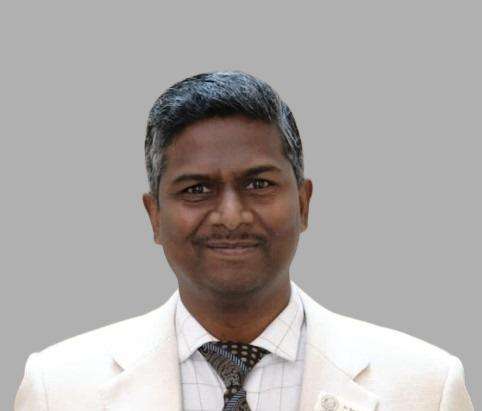
Dr. Sree Harsha N, M.Pharm, PhD — Chairman
Ready to Start Your Pharmacy Career?
B.Pharm Rs 70,000/yr • D.Pharm Rs 80,000 (2 yrs) • No NEET • PCI Approved