
The scope of B.Pharm in India in 2026 is wide and still expanding. A four-year Bachelor of Pharmacy opens more than 10 distinct career paths — hospital pharmacy, industry QA/QC and production, drug inspection, clinical research, regulatory affairs, pharmacovigilance, medical science liaison, pharma sales, academics and your own pharmacy business. Entry salaries typically run Rs 3–5 LPA and climb to Rs 15–35 LPA at leadership level, with government roles offering 7th Pay Commission pay plus pension.
⏱ 11 min read
✎ VSCP Careers Desk
Get the 2026-27 Admission Brochure
Fees, eligibility, placement details, campus photos — all in one PDF. WhatsApp us to get it instantly.
RGUHS Affiliated
Sarjapur Road, Bangalore
91.16% RGUHS Result
No Entrance Exam
When people think pharmacy, they picture someone behind a counter dispensing tablets. That’s about 10% of what a B.Pharm degree unlocks.
Here is what the other 90% looks like. The person auditing whether a Rs 200-crore batch of tablets is safe to ship? Often a B.Pharm graduate. The specialist filing the dossier that lets an Indian medicine sell in the United States? B.Pharm. The government officer who can shut down a factory for a GMP violation, the analyst tracking side-effects for a global drug, the founder running a chain of three pharmacies in Bangalore — all common landing spots for people who started exactly where you are, choosing a pharmacy course after 12th.
This is a field where the degree is a passport, not a cul-de-sac. Let me walk you through the actual industry, the 10+ paths in front of you, what each one pays, and why doing this in Bangalore quietly stacks the odds in your favour.
The Landscape — India’s Pharma Industry in 2026
Start with the numbers, because they explain everything that follows. India is the world’s third-largest pharmaceutical market by volume and the single largest supplier of generic medicines on the planet — roughly one in five generic pills taken anywhere on Earth is made here. The domestic market has crossed Rs 4 lakh crore and is compounding at 10–12% a year.
Why does that matter for your career? Because growth of that scale is not abstract. Every USFDA-approved plant — India has more than 500 of them, the most outside the US — needs armies of QA and QC staff. Every export shipment to the 200+ countries India sells to needs regulatory professionals. The government’s Production Linked Incentive (PLI) push added tens of thousands of manufacturing jobs. An ageing population keeps hospital and retail pharmacy demand climbing. Schemes like Jan Aushadhi and PMJAY need qualified pharmacists in places that never had them before.
Now zoom into Bangalore specifically, because this is where it gets interesting. The city is home to 500+ pharma and biotech companies — Biocon, Strides, GSK, AstraZeneca, Abbott and hundreds of mid-size formulation and CRO firms clustered around Electronic City, Bommasandra and the Sarjapur belt. Karnataka anchors India’s largest biotech corridor. For a fresh graduate, that density means one thing: internships, campus drives and first jobs are a bus ride away, not a relocation project. It also shapes what you study — a modern RGUHS B.Pharm syllabus is built to feed exactly these employers.
10 Career Paths After B.Pharm
Ten paths, ten very different working lives. Read each one and ask yourself: Can I see myself here?
1. Hospital Pharmacist
What you actually do: Run the medication engine of a hospital — dispensing, checking for dangerous drug interactions, counselling patients on how to take their medicines, and advising doctors on dosing. In a good hospital you are part of the clinical team, not a stockroom.
Salary: Rs 2.5–4 LPA to start → Rs 5–8 LPA with a few years and a senior/chief pharmacist tag.
Skills that matter: Pharmacology recall, attention to detail, calm patient communication.
Growth: Chief Pharmacist, clinical pharmacy specialist, or a bridge into a Pharm.D and full clinical practice.
2. Pharmaceutical Industry — QA / QC / Production
What you actually do: This is the biggest single employer of B.Pharm graduates. In QC you test raw materials and finished batches. In QA you own the documentation and systems that keep the plant audit-ready. In Production you run the formulation lines — tablets, capsules, injectables — under strict GMP.
Salary: Rs 3–4.5 LPA entry → Rs 8–15 LPA as a QA Manager or Production Head.
Skills that matter: GMP discipline, documentation rigour, comfort with instruments like HPLC.
Growth: Picture a 2021 graduate who joined a Bommasandra plant as a QC analyst at Rs 3.2 LPA. Three promotions later they run QA for two lines and clear USFDA audits — the kind of role that reaches Rs 15 LPA+.
3. Drug Inspector
What you actually do: Carry a Gazetted Officer’s authority. You license and inspect pharmacies and factories, pull samples, and can halt operations that break the rules. It is one of the most respected government roles a pharmacist can hold.
Salary: Rs 5–9 LPA on the 7th Pay Commission, plus allowances, pension and job security money can’t buy.
Skills that matter: Knowledge of the Drugs and Cosmetics Act, integrity, sharp observation.
Growth: Assistant Drug Controller → Drug Controller. It sits inside the wider world of government jobs after pharmacy, which we break down in its own section below.
4. Clinical Research Associate (CRA)
What you actually do: Be the eyes of a trial. You travel to hospital sites, verify that clinical trials follow Good Clinical Practice, check patient data, and keep studies compliant. India is fast becoming a global clinical-trial hub, and CRAs are in demand.
Salary: Rs 3.5–5 LPA entry → Rs 8–14 LPA as a senior CRA or Clinical Trial Manager.
Skills that matter: GCP knowledge, meticulous monitoring, willingness to travel.
Growth: Clinical Project Manager, then into clinical operations leadership at a CRO or MNC.
5. Medical Science Liaison (MSL)
What you actually do: Be the scientific face of a pharma company to top doctors. You discuss clinical data, answer complex questions specialists ask, and feed real-world insight back to the company. It is prestige work — part scientist, part diplomat.
Salary: Rs 8–12 LPA to start (this role usually rewards a Pharm.D, M.Pharm or strong clinical background) → Rs 15–25 LPA as a senior/lead MSL.
Skills that matter: Deep therapeutic knowledge, confident communication with experts, credibility.
Growth: MSL Manager, Medical Advisor, Medical Affairs leadership. Many start in pharmacovigilance or regulatory and pivot in.
6. Regulatory Affairs
What you actually do: Build the dossiers that let a medicine legally exist. You compile data and submit applications to CDSCO, USFDA, EMA and other regulators. For any company that exports, you are indispensable — nothing ships without your approvals.
Salary: Rs 3.5–5 LPA entry → Rs 10–18 LPA as a Regulatory Affairs Manager.
Skills that matter: Precision, global regulatory literacy, project management.
Growth: Take a typical 2020 graduate who added a short regulatory certification — four years on they handle US filings for a Bangalore MNC at around Rs 8 LPA, with the RA-head track (Rs 18 LPA+) clearly ahead.
7. Pharmacovigilance
What you actually do: Guard drug safety after launch. You collect, assess and report adverse drug reactions, and help decide when a warning label or recall is needed. Global safety-reporting rules keep this niche hiring steadily.
Salary: Rs 3–4.5 LPA entry → Rs 8–14 LPA as a Drug Safety Lead.
Skills that matter: Medical terminology, analytical thinking, database tools like Argus.
Growth: PV Team Lead → Safety Operations Manager. One of the smoothest entry points into big-pharma MNCs.
8. Medical Representative (Pharma Sales)
What you actually do: Carry a company’s products to doctors and chemists, explain the science, and build the relationships that drive prescriptions. It is people-facing, target-driven, and the fastest way to visible income early on.
Salary: Rs 2.5–4 LPA base plus incentives → strong performers in metros clear Rs 8–12 LPA; Area Sales Managers reach Rs 12–20 LPA.
Skills that matter: Persuasion, product knowledge, resilience, relationship-building.
Growth: Area Sales Manager → Regional Manager → Sales/Marketing head — the classic route into pharma leadership.
9. Academics & Research
What you actually do: Teach the next batch and push the science forward. With an M.Pharm you can lecture; with a Ph.D you run research, publish, and win grants at colleges, NIPERs and government labs.
Salary: Rs 3–5 LPA as a fresh lecturer → Rs 8–15 LPA as Associate/Full Professor, with UGC pay scales in aided institutions.
Skills that matter: Subject mastery, teaching ability, research aptitude.
Growth: Assistant → Associate → Professor → HOD/Principal, or scientist roles at NIPER, CDRI and IICT.
10. Entrepreneurship — Your Own Pharmacy Chain
What you actually do: Be the owner. A B.Pharm licence lets you open and run retail pharmacies — and unlike most graduates, you can build a chain. The Jan Aushadhi scheme even offers subsidised support to open generic-medicine stores.
Salary: Fully your call. A single well-run store can net Rs 3–8 LPA; a three or four-store operator in a growing Bangalore suburb can do considerably more.
Skills that matter: Business sense, inventory and cash discipline, local relationships.
Growth: One store → a neighbourhood chain → wholesale distribution or an online pharmacy tie-up. If you already hold a D.Pharm, compare the career options after D.Pharm before you decide how far to take the degree.
See yourself in one of these roles? B.Pharm admissions for 2026 are open — no entrance exam required.
The Government Job Route
If you value stability, authority and a pension, the government route is one of the strongest reasons to do a B.Pharm. These posts are competitive, but the degree makes you eligible for roles most graduates can only dream of. Here is the map:
| Post | Eligibility | Exam / Body | Salary |
|---|---|---|---|
| Drug Inspector | B.Pharm (min.) | KPSC / State PSC / UPSC | Rs 5–9 LPA |
| Government Pharmacist | B.Pharm / D.Pharm + registration | State health dept / ESIC / AIIMS | Rs 3.5–6 LPA |
| Railway Pharmacist | B.Pharm / D.Pharm | RRB (Railway Recruitment Board) | Rs 3.5–5.5 LPA |
| Scientific / Technical Officer | B.Pharm (M.Pharm preferred) | DRDO / CSIR / ISRO | Rs 5–10 LPA |
| Defence Pharmacist | B.Pharm / D.Pharm | AFMS / Central Health Services | Rs 4–7 LPA |
In Karnataka, Drug Inspector recruitment runs through the KPSC, with a B.Pharm as the minimum qualification for this Gazetted post. The takeaway: strong academics are not just about marks — they are your foundation for cracking these competitive exams. For the full list of eligible posts and how to prepare, see our guide to government jobs after pharmacy.
Higher Studies After B.Pharm
A B.Pharm is a complete professional degree — you can work the day you graduate. But it is also a launchpad, and the right postgraduate move can multiply your ceiling.
M.Pharm (Master of Pharmacy)
The classic next step. Two years, entered via GPAT, with specialisations in Pharmaceutics, Pharmacology, Pharmaceutical Chemistry, Pharmacognosy, Pharmaceutical Analysis or Clinical Pharmacy. It is the key to senior R&D roles and lecturer positions.
MBA in Pharmaceutical Management
For the commercially minded. It marries science with strategy and points you at pharma marketing, brand management, supply chain and business development — the leadership pipeline. Offered by NIPER, BITS Pilani and several top B-schools.
MS Abroad (USA, UK, Australia, Canada)
A B.Pharm is internationally respected. Graduates head abroad for an MS in Pharmaceutical Sciences, Clinical Research, Regulatory Affairs or Public Health — and, in the US, into the PharmD pathway. It is a genuine door to a global career.
Ph.D in Pharmaceutical Sciences
The research summit. A doctorate opens academic professorships, government research labs (NIPER, CDRI, IICT) and senior scientist roles in multinational R&D.
Pharm.D (Doctor of Pharmacy)
A post-baccalaureate clinical route (three years after B.Pharm). Pharm.D holders practise as clinical pharmacists, working alongside doctors on patient care — and it is the natural feeder into MSL and medical-affairs roles.
Not sure whether to aim for a diploma or the full degree first? Our B.Pharm vs D.Pharm comparison lays out the trade-offs, and if you already hold a diploma, the lateral entry B.Pharm after D.Pharm guide shows how to join directly in the second year.
Salary Progression: What You Can Realistically Earn
Numbers you can plan around. These ranges reflect Indian pharma salaries in 2025–2026 across the common specialisations — and yes, they move a lot depending on company, city and how hard you push.
| Experience | Industry (QA/QC/RA/PV) | Clinical Research | Sales / MR |
|---|---|---|---|
| 0–1 yr (Fresher) | Rs 3–4.5 LPA | Rs 3.5–5 LPA | Rs 2.5–4 LPA + incentives |
| 2–4 yrs | Rs 5–9 LPA | Rs 6–10 LPA | Rs 6–12 LPA |
| 5–8 yrs | Rs 9–16 LPA | Rs 10–18 LPA | Rs 12–20 LPA |
| 8+ yrs (Leadership) | Rs 16–35 LPA | Rs 18–30 LPA | Rs 20–40 LPA |
Indicative ranges compiled from industry surveys, Naukri and LinkedIn Salary Insights 2025–2026. Actual pay varies by employer, location and performance. For a role-by-role breakdown, see our detailed pharmacy salary in India guide.
💡 Where the next decade of jobs is being created
The most exciting part of B.Pharm in 2026 is the roles that barely existed five years ago. Keep these on your radar:
- AI in drug discovery: companies now use machine learning to screen molecules — pharmacists who understand the science and the data are rare and valuable.
- Pharmacoinformatics: managing and mining huge clinical and safety datasets.
- Digital therapeutics: software-based treatments and app-driven adherence programmes that need pharmacy brains behind them.
- Precision medicine: tailoring drugs to a patient’s genetics — a frontier where clinical pharmacy meets genomics.
Add a short data-analytics or bioinformatics course to your B.Pharm and you position yourself at Rs 5–12 LPA in fields with almost no competition yet.
Why Bangalore Gives You an Edge
Two students can do the same B.Pharm and land in very different places — and geography is a bigger factor than most people admit. Doing your degree in Bangalore is a quiet, compounding advantage. Here is why:
- ✓ 500+ companies on your doorstep: Biocon, Strides, GSK, AstraZeneca, Abbott and a long tail of formulation and CRO firms — the internships and campus drives happen locally.
- ✓ The biotech corridor: Karnataka hosts India’s largest biotech cluster, so the newest, best-paid roles surface here first.
- ✓ A CRO hub: clinical-research organisations concentrated in the city make CRA and clinical-trial jobs unusually accessible to freshers.
- ✓ A startup ecosystem: health-tech and digital-therapeutics startups, plus easy access to mentors and funding for anyone eyeing entrepreneurship.
- ✓ Manufacturing clusters: Electronic City and Bommasandra sit minutes from the Sarjapur belt, packing QA/QC/Production jobs into a short commute.
Vidya Siri College of Pharmacy sits right on Sarjapur Road, wired into this exact corridor. That location is not a detail — it is why our students walk into industry exposure that graduates in smaller cities have to chase.
About B.Pharm at Vidya Siri College of Pharmacy
If you want to build this career from a solid base, here is what a B.Pharm at VSCP looks like:
- ✓ PCI Approved & RGUHS Affiliated — a degree recognised across India and abroad
- ✓ 60 seats, direct merit-based admission — no NEET, no entrance exam (min. 45% in 12th PCB/PCM; 40% for SC/ST)
- ✓ Fees Rs 70,000/year — Rs 2,80,000 for the full four years (B.Pharm fees in Bangalore)
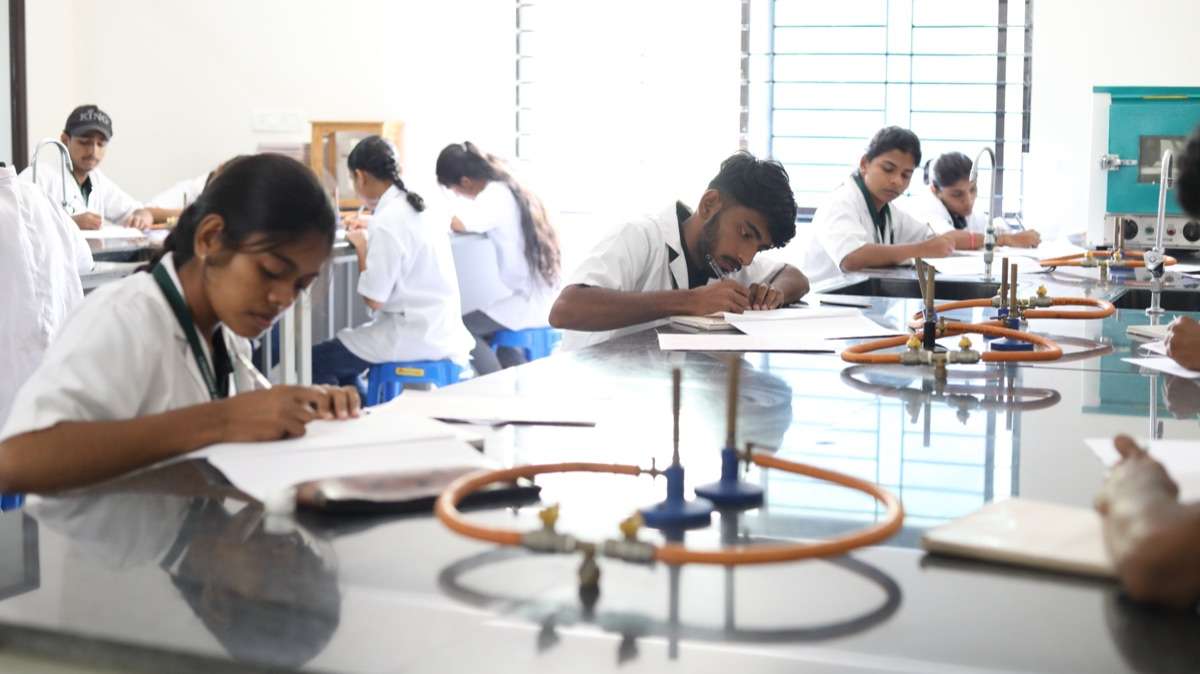
- ✓ 16 fully equipped laboratories and experienced PhD/M.Pharm/Pharm.D faculty
- ✓ 91.16% result in the RGUHS April/May 2026 examination
Ready to look at dates and documents? Start with B.Pharm admission in Bangalore.
Direct merit admission · 60 seats only · No entrance exam. Talk to our admissions team today.
Frequently Asked Questions
What is the scope of B.Pharm in India in 2026?
B.Pharm graduates in 2026 can work in hospital pharmacy, pharmaceutical industry roles (QA, QC, production, R&D), drug inspection, clinical research, regulatory affairs, pharmacovigilance, medical science liaison, pharma sales, academics, and their own pharmacy business. With India’s pharma market above Rs 4 lakh crore and growing 10–12% a year, demand for qualified pharmacists stays strong across sectors.
What salary can a B.Pharm fresher expect in India?
A B.Pharm fresher typically earns Rs 3–4.5 LPA in industry QA/QC roles, Rs 3.5–5 LPA in clinical research, and Rs 2.5–4 LPA plus incentives in pharma sales. With 5–8 years of experience, salaries commonly reach Rs 9–18 LPA, and leadership roles can cross Rs 20–35 LPA.
Which career after B.Pharm pays the most?
Over a full career, regulatory affairs, medical science liaison, and pharma sales leadership tend to pay the most, reaching Rs 18–40 LPA at senior levels. Drug Inspector and other government posts pay Rs 5–9 LPA but add unmatched job security and pension. Early on, pharma sales can pay the highest through incentives.
Is NEET required for B.Pharm admission?
No. NEET is not required for B.Pharm in Karnataka or most states. Admission is based on 12th standard PCB or PCM marks. Some states use their own entrance test (KCET in Karnataka for government-quota seats), but many private colleges including Vidya Siri College of Pharmacy offer direct merit-based admission with no entrance exam.
What are the best higher study options after B.Pharm?
Popular options are M.Pharm (via GPAT) for R&D and teaching, MBA in Pharmaceutical Management for business and marketing roles, Pharm.D for clinical practice, Ph.D for research and academics, and an MS abroad in pharmaceutical sciences, clinical research or regulatory affairs. M.Pharm is the most common route within India.
Why is Bangalore a good place to study B.Pharm?
Bangalore hosts 500+ pharma and biotech companies including Biocon, Strides, Abbott and AstraZeneca, plus India’s largest biotech cluster and a dense concentration of CROs. Studying here gives direct access to internships, campus recruitment and a professional network that graduates in smaller cities usually lack, especially along the Sarjapur Road corridor.
Your B.Pharm career starts with one decision.
PCI Approved · RGUHS Affiliated · Rs 70,000/year · Sarjapur Road, Bangalore. Seats for 2026 are limited to 60.
Explore More: Related Guides
- → B.Pharm Admission in Bangalore 2026 — Fees, Eligibility & Process
- → Which Pharmacy Course to Take After 12th
- → B.Pharm vs D.Pharm — Which Should You Choose?
- → Government Jobs After Pharmacy — Full List & Exams
- → Pharmacy Salary in India — Role-by-Role Guide
- → Career After D.Pharm in India — Scope & Salary
- → B.Pharm Syllabus (RGUHS) — Subjects Year by Year
- → B.Pharm Fees in Bangalore — Vidya Siri College
- → Lateral Entry B.Pharm After D.Pharm — Complete Guide
- → Pharmacy Admission Without NEET 2026
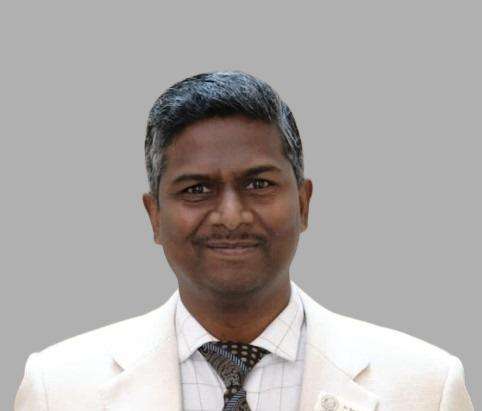
Dr. Sree Harsha N, M.Pharm, PhD — Chairman
Ready to Start Your Pharmacy Career?
B.Pharm Rs 70,000/yr • D.Pharm Rs 80,000 (2 yrs) • No NEET • PCI Approved